

A sectional offers more connected seating. A standard sofa keeps the room adaptable. The better choice depends less on style trends and more on the shape of the room, the number of daily users and how easily each piece can enter the home.

The quick decision
| Choose a sectional if | Choose a sofa if |
|---|---|
| The seating zone has a clear corner and room for the forward leg | You need to reposition furniture often |
| Three or more people regularly sit together | The room has several doors or narrow circulation paths |
| You want lounge seating to define the room | You prefer a lighter visual footprint |
| The delivery route can handle the package | The room serves several functions |
Start with room shape
An L-shaped sectional is usually most efficient in a room with a protected corner. The long section runs along a wall while the chaise or return defines the lounge area. In an open-plan room, that return can also create a visual boundary between living and dining zones.
A sofa is often better in a narrow room. It leaves both ends open, making the room feel less like a corridor and giving you flexibility to add a lounge chair later. If doors, closets or a hallway cut into the plan, a straight sofa usually preserves more usable circulation.
Count seats and usable seats
A sectional may advertise five positions, but the corner is not always a comfortable seat for every guest. Think about how people actually sit: one person may want to put their feet up, another may read upright, and someone else may need a clear route to the kitchen.
Measure from the front edge of the seat to the nearest obstruction. A connected sectional can feel more sociable, but only when every seat has enough breathing room and the coffee table does not force people to turn sideways.
Compare three real footprints
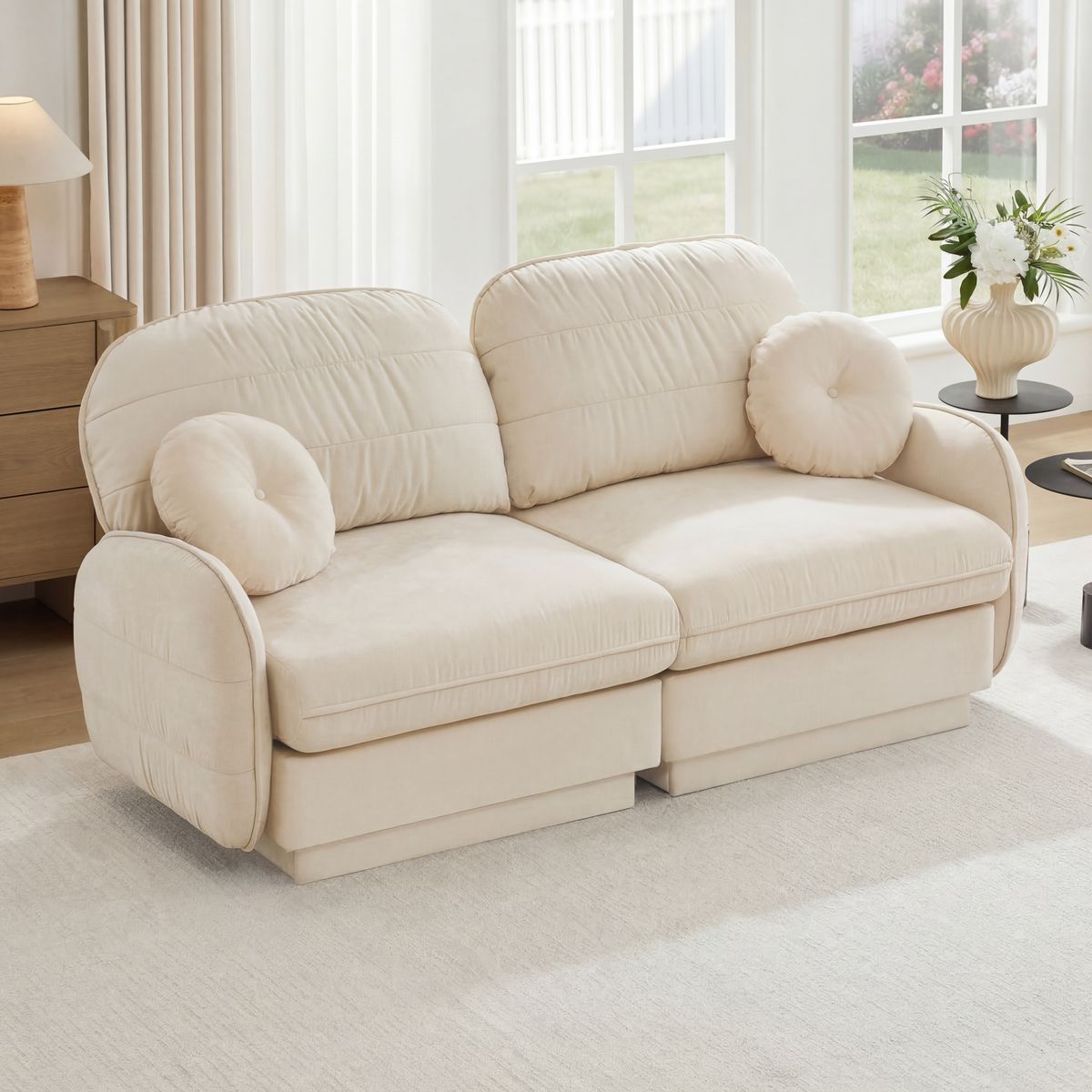
Aobtkel chenille cloud loveseat
The 73.2 × 33.4 × 37.4 inch loveseat is the smallest of this group. Its straight footprint makes it a natural fit for a compact room, a bedroom sitting area or an apartment where the sofa should not dominate the floor plan. It is currently priced at $298.13.
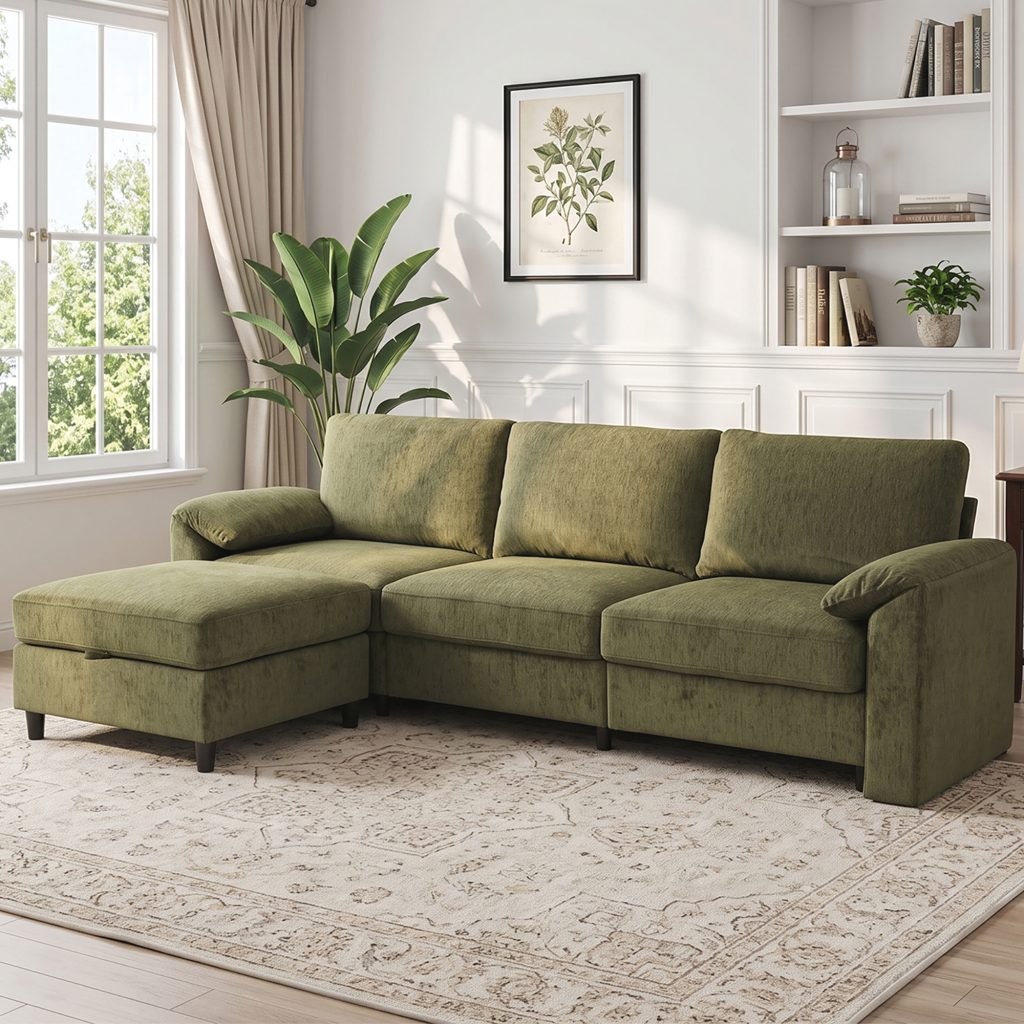
Aobtkel chenille cloud L-shaped loveseat
For more lounge space without jumping to a full-size sectional, the 73.2 × 57.8 × 37.4 inch L-shaped loveseat adds a movable ottoman and a deeper seating arrangement. The current price is $378.80. The forward section is the key measurement: tape the entire L, not only the back wall.
Aobtkel 108.3-inch sectional
The 108.30 × 61.80 × 35.00 inch sectional is designed for a dedicated lounge area. Its current price is $581.93. It creates a strong anchor in a larger apartment or family room, but it needs enough clear space for the chaise and the delivery route.
Check circulation before style
Keep the main walking path open first. A practical starting range is 24 to 36 inches, with more room around frequently used doors and the path between seating and the kitchen or hallway.
- Can the front door open fully?
- Can two people pass the coffee table without moving it?
- Can a vacuum or delivery box move through the room?
- Does the chaise block access to a window, radiator or closet?
A sectional is most successful when its corner feels useful. If the return only blocks a walkway, a sofa and separate chair will usually make the room work harder.
Consider delivery early
The longer back section of a sectional can be harder to turn in a stairwell or elevator than a standard sofa. Check both assembled dimensions and package dimensions. If the final turn is tight, ask before ordering and photograph the route with a tape measure.
Aobtkel offers free shipping within the contiguous 48 U.S. states and Washington, D.C. Delivery timing and access still matter in apartments, townhomes and buildings with small elevators.
Best for / consider another option if
The straight loveseat is best for: a flexible room, a bedroom sitting area or a narrow apartment where furniture may need to move.
The L-shaped loveseat is best for: a compact corner that benefits from an ottoman but does not need a full family-room sectional.
The 108.3-inch sectional is best for: a defined lounge zone with room for the chaise and a clear route around it.
Consider another layout if: the sectional closes off the room’s main circulation or cannot pass through the entry route. A standard sofa plus a lounge chair often creates more visual and functional flexibility.
Delivery, assembly and aftercare
Clear the floor before delivery and confirm the room is ready for the package. Keep the packaging until you have inspected the piece and checked the dimensions in place. Returns require an application and review under the current store process; review the latest terms before ordering.
The bottom line
Choose a sectional for a protected corner and connected seating. Choose a sofa for flexibility, narrower rooms and simpler circulation. The right answer is the one that leaves enough space to live around the furniture.
The details
Questions before you choose
Is a sectional better than a sofa for a small living room?
Not always. A sectional can work well in a protected corner, while a straight sofa often preserves more circulation in a narrow or multipurpose room. Measure the complete footprint first.
How much space should I leave around a sectional?
A practical starting range is 24 to 36 inches for the main walking path. Keep extra clearance where doors, cabinets, radiators or frequently used routes need to remain unobstructed.
Should I measure package dimensions for a sectional?
Yes. A sectional can be difficult to turn in a hallway, elevator or stairwell. Check package dimensions and delivery access in addition to the assembled footprint.